

Total Ankle Arthroplasty (Ankle Replacement Surgery) in Hisar
Indications:
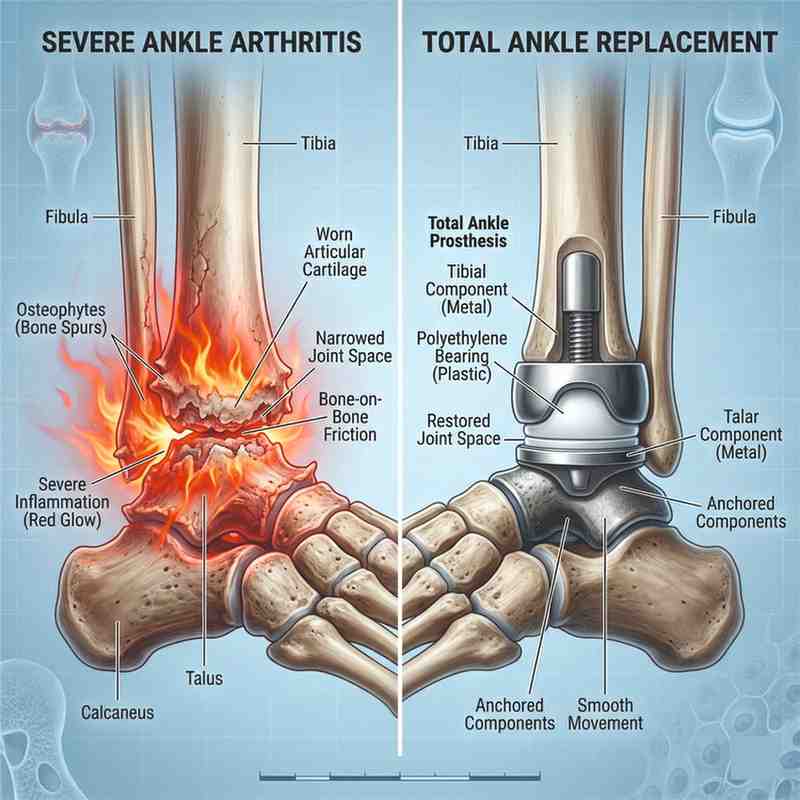
Total Ankle Arthroplasty (TAA), commonly known as ankle replacement surgery, is recommended for patients suffering from advanced ankle joint arthritis involving the talocrural joint. The most common indication is end-stage osteoarthritis, where the cartilage between the tibia and talus wears out, leading to persistent pain, stiffness, and difficulty in walking.
It may also be indicated in cases of rheumatoid arthritis, post-traumatic arthritis following fractures or ligament injuries, and other degenerative joint conditions. Patients typically report pain while walking, swelling around the ankle, reduced range of motion, and difficulty performing daily activities.
TAA is considered when non-surgical treatments such as medications, physiotherapy, activity modification, and supportive footwear fail to provide adequate relief. It is especially suitable for patients with preserved ligament stability and a reasonably well-aligned ankle joint.
Technique:
The procedure is performed under strict sterile conditions using advanced surgical techniques and precision instrumentation. An anterior approach is commonly used, where an incision is made over the front of the ankle joint between the extensor tendons to safely access the joint.
Specialized cutting guides are utilized to accurately remove the damaged articular surfaces of the distal tibia and the dome of the talus. Care is taken to preserve as much healthy bone as possible while ensuring proper alignment and balance of the joint.
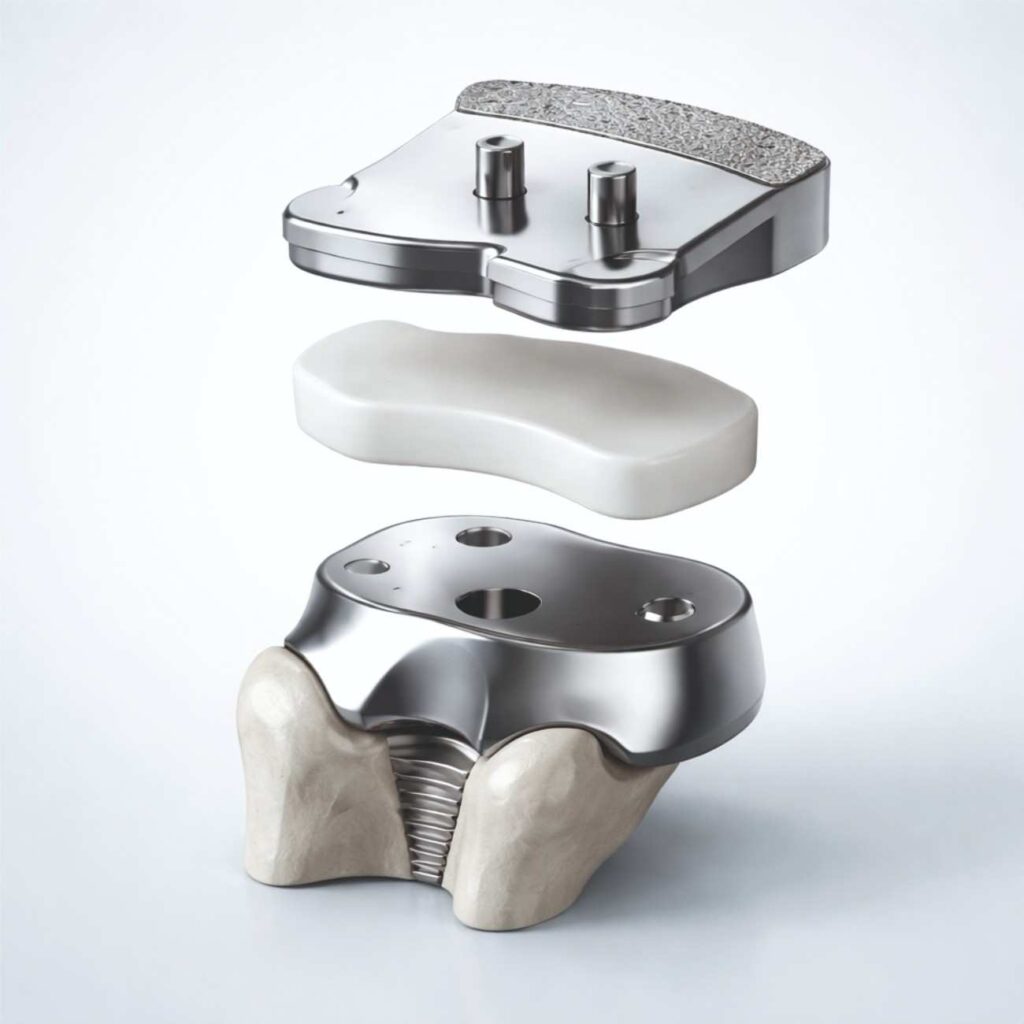
Once the joint surfaces are prepared, anatomically designed prosthetic components are implanted. These typically include metal components fixed to the tibial and talar sides, along with a high-quality polyethylene insert placed between them. Depending on the implant design, the bearing may be fixed or mobile, allowing smooth and controlled movement of the ankle joint.
Soft tissue balancing and alignment are carefully assessed before closure to ensure stability and optimal function.
Objective:
The primary objective of Total Ankle Arthroplasty is to relieve chronic ankle pain while preserving the natural range of motion of the joint, particularly dorsiflexion and plantarflexion movements that are essential for a normal walking pattern.
Unlike ankle fusion, which eliminates joint motion, TAA allows patients to maintain a more natural gait and reduces stress on adjacent joints. The procedure aims to improve mobility, enhance overall function, and help patients return to daily activities with greater comfort and independence.
1. Who is the right candidate for ankle replacement surgery?
Patients with severe ankle arthritis, persistent pain, and limited movement who do not respond to non-surgical treatment are ideal candidates, especially if joint stability is preserved.
2. How is ankle replacement different from ankle fusion?
Ankle replacement preserves joint movement, allowing a more natural walking pattern, while fusion eliminates movement but stabilizes the joint.
3. How long does it take to recover after TAA?
Initial recovery takes a few weeks, but full recovery with improved strength and mobility may take 3–6 months with proper rehabilitation.
4. How long does an ankle implant last?
Modern ankle implants can last 10–15 years or longer, depending on patient activity level and proper care.
5. When can I start walking after surgery?
Weight-bearing usually begins gradually after a few weeks, depending on healing and your surgeon’s advice.
6. What are the risks of ankle replacement surgery?
Like any surgery, risks include infection, implant loosening, or stiffness, but these are uncommon when performed with proper technique and care.