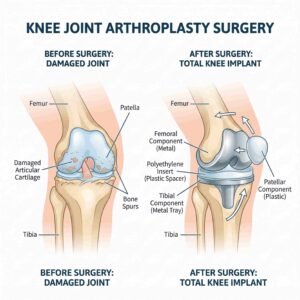
Arthroplasty: The surgical reconstruction or replacement of a joint (e.g., Total Hip Replacement).
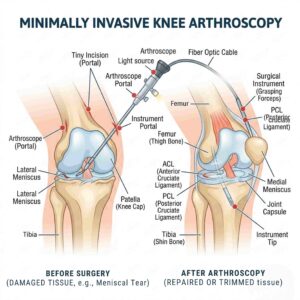
Arthroscopy: A minimally invasive procedure where a small camera (arthroscope) is inserted into a joint to diagnose and treat injuries through tiny incisions.
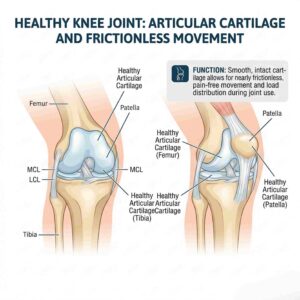
Articular Cartilage: The smooth, white tissue that covers the ends of bones where they come together to form joints, allowing them to glide over each other with very little friction.
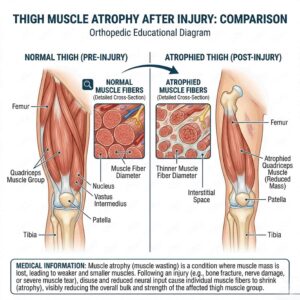
Atrophy: The wasting away or decrease in size of a muscle, often due to lack of use following an injury.
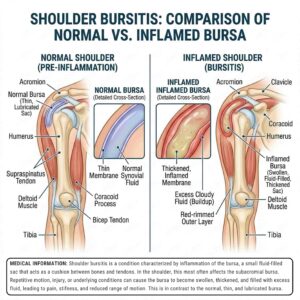
Bursa: A fluid-filled sac that acts as a cushion between a bone and a tendon. Bursitis is the inflammation of this sac.
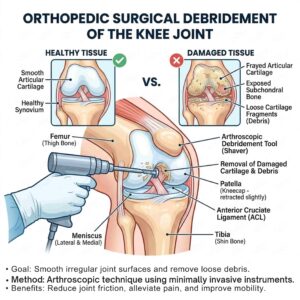
Debridement: The surgical removal of damaged, infected, or dead tissue to improve the healing potential of the remaining healthy tissue.
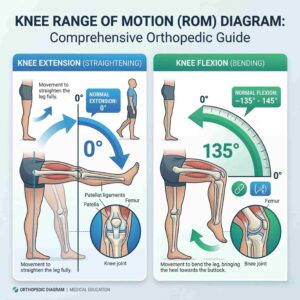
Extension: The act of straightening a joint (the opposite of Flexion, which is bending).
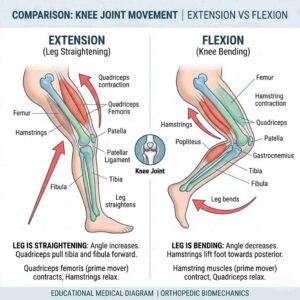
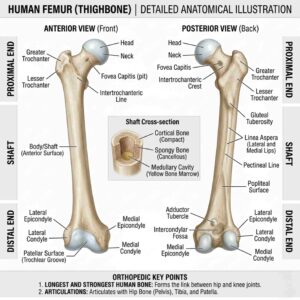
Femur: The thighbone; the longest and strongest bone in the human body.
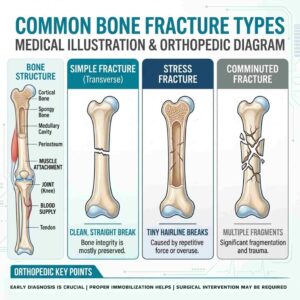
Fracture: A break in the bone. This can range from a “stress fracture” (hairline crack) to a “comminuted fracture” (bone broken into multiple pieces).
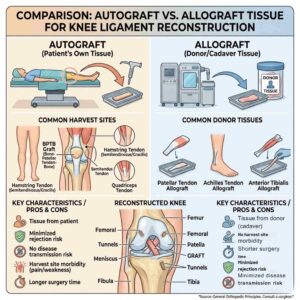
Graft: A piece of living tissue (bone, tendon, or skin) transplanted surgically to replace or repair damaged tissue.
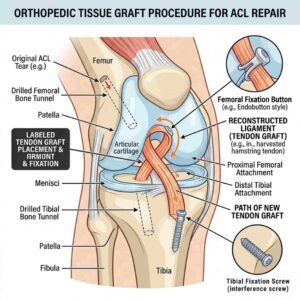
Autograft: Tissue taken from the patient’s own body.
Allograft: Tissue taken from a donor.
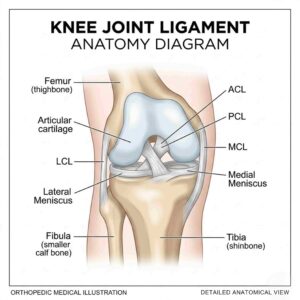
Ligament: A tough band of fibrous tissue that connects bone to bone, providing stability to the joint (e.g., the ACL).
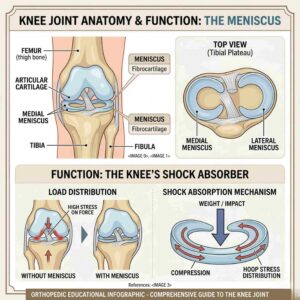
Meniscus: A C-shaped piece of tough, rubbery cartilage in the knee that acts as a shock absorber between the femur and tibia.
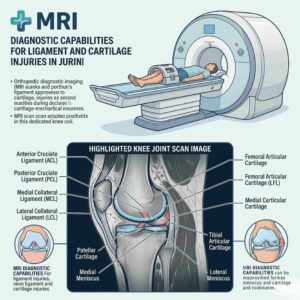
MRI (Magnetic Resonance Imaging): A diagnostic test that uses magnetic fields to create detailed images of soft tissues like ligaments, tendons, and cartilage.
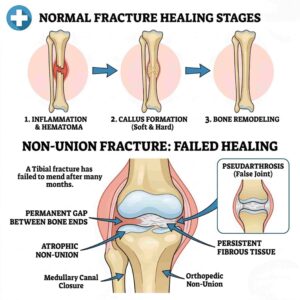
Non-Union: A condition where a fractured bone fails to heal back together after an extended period.
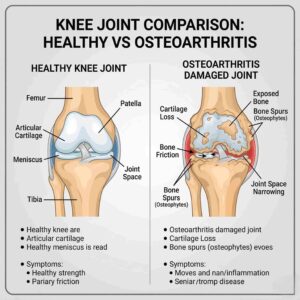
Osteoarthritis (OA): “Wear-and-tear” arthritis caused by the breakdown of joint cartilage over time.
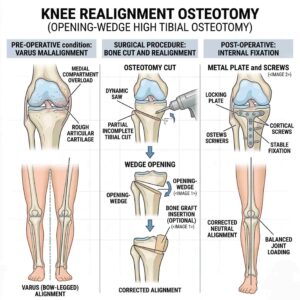
Osteotomy: A procedure where a bone is surgically cut and realigned to shift weight away from a damaged area.
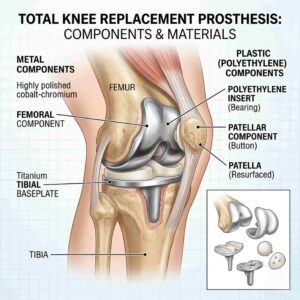
Prosthesis: An artificial body part, such as the metal and plastic components used in a joint replacement.
Range of Motion (ROM): The full movement potential of a joint, usually measured in degrees.
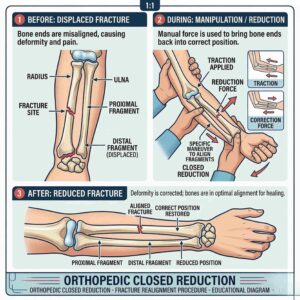
Reduction: The process of “setting” a bone or joint back into its correct anatomical position after a fracture or dislocation.
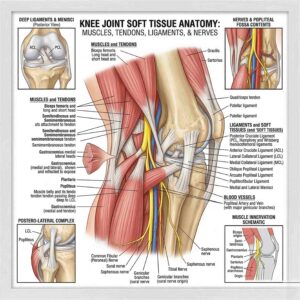
Soft Tissue: Tissues that connect, support, or surround other structures and organs of the body (muscles, tendons, ligaments, and nerves).
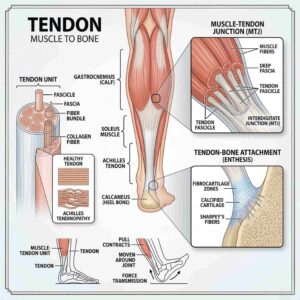
Tendon: A flexible but inelastic cord of strong fibrous collagen tissue attaching a muscle to a bone (e.g., the Achilles tendon).
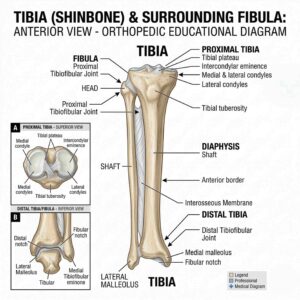
Tibia: The shinbone; the larger of the two bones in the lower leg.