Introduction
Knee pain is a common problem that affects people of all ages. Whether you are young work a lot or are older knee pain can really disrupt your life and make it less enjoyable.
Sometimes knee pain happens after an injury and other times it can be because of age or a medical condition. Finding out exactly what is causing the pain is the step to getting better.
Lets look at the 10 common reasons for knee pain and what you can do to treat it.
1. Osteoarthritis
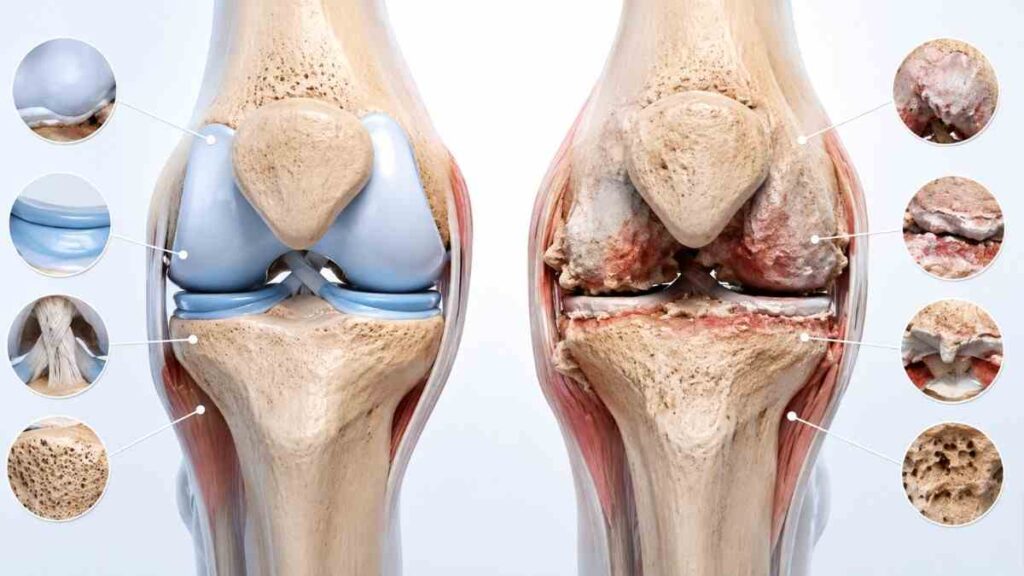
Osteoarthritis is one of the causes of knee pain especially for people over 50. It happens when the cartilage in your knee starts to wear
Symptoms
- Pain when walking
- Stiffness in the morning
- Swelling
- Trouble climbing stairs
Treatment
- Medications to help with pain
- Physiotherapy
- Managing your weight
- Knee replacement surgery if its really bad
2. Meniscus Tear
The meniscus helps cushion your knee. A sudden twist or deep squat can tear it.
Symptoms
- Locking feeling
- Clicking sounds
- Pain when bending
- Swelling
Treatment
- Rest
- Physiotherapy
- Surgery for tears
3. Patellar Tendinitis
Also called Jumpers Knee this often affects athletes who run or jump a lot.
Symptoms
- Pain below the kneecap
- Tenderness
- Pain during activity
Treatment
- Change your activities
- Stretching exercises
- Medications to reduce inflammation
- Physiotherapy
4. Ligament Injuries (ACL, PCL, MCL)
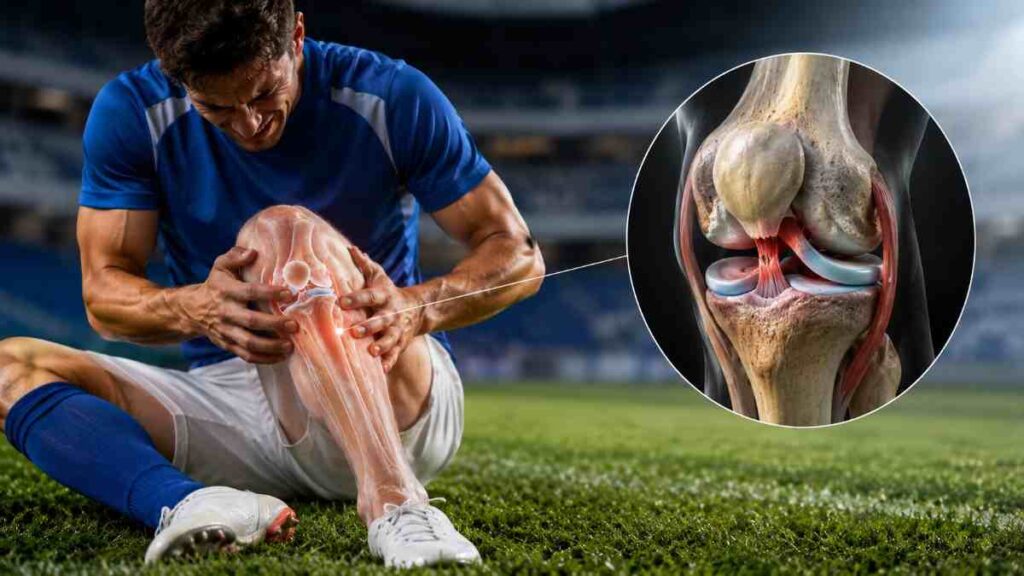
Things like sports sudden turns or accidents can hurt the ligaments that keep your knee stable.
Symptoms
- pain right away
- Swelling quickly
- Knee feels unstable
- Trouble walking
Treatment
- Rest and ice
- Knee brace
- Physiotherapy
- Surgery to fix the ligament if needed
5. Bursitis
Bursae are sacs that help reduce friction in your knee. When they get inflamed, its called bursitis.
Symptoms
- Swelling
- Warmth around the knee
- Pain when kneeling
Treatment
- Ice packs
- Rest
- Medication
- Draining fluid if needed
6. Rheumatoid Arthritis
This is a condition where your body attacks its joints, including your knees.
Symptoms
- Swelling that doesn’t go away
- Stiffness in the morning
- Pain in both knees
- Feeling
Treatment
- Medications to modify the disease
- Physiotherapy
- Regular check-ups with your doctor
7. Gout
Gout happens when uric acid crystals build up in your joint.
Symptoms
- Severe pain suddenly
- Redness
- Swelling
- Trouble moving your knee
Treatment
- Medications to lower acid
- Change your diet
- Drink plenty of water
8. Obesity
Extra weight puts pressure on your knees, which can damage cartilage faster.
Symptoms
- Pain after walking
- Trouble standing for long
- Discomfort gets worse over time
Treatment
- Lose weight
- Exercise
- Make lifestyle changes
9. Fractures Around the Knee
Falls, accidents or direct hits can cause fractures in the kneecap or nearby bones.
Symptoms
- Pain
- Can’t bear weight
- Swelling
- Deformity
Treatment
- X-rays
- Bracing
- Surgery for bad fractures
10. Overuse and Muscle Strain
Doing the movements over and over without rest can strain your muscles and tendons.
Symptoms
- Mild aching pain
- Muscle tightness
- Pain after exercise
Treatment
- Rest
- Ice therapy
- Stretching exercises
- Gradually get back to activity
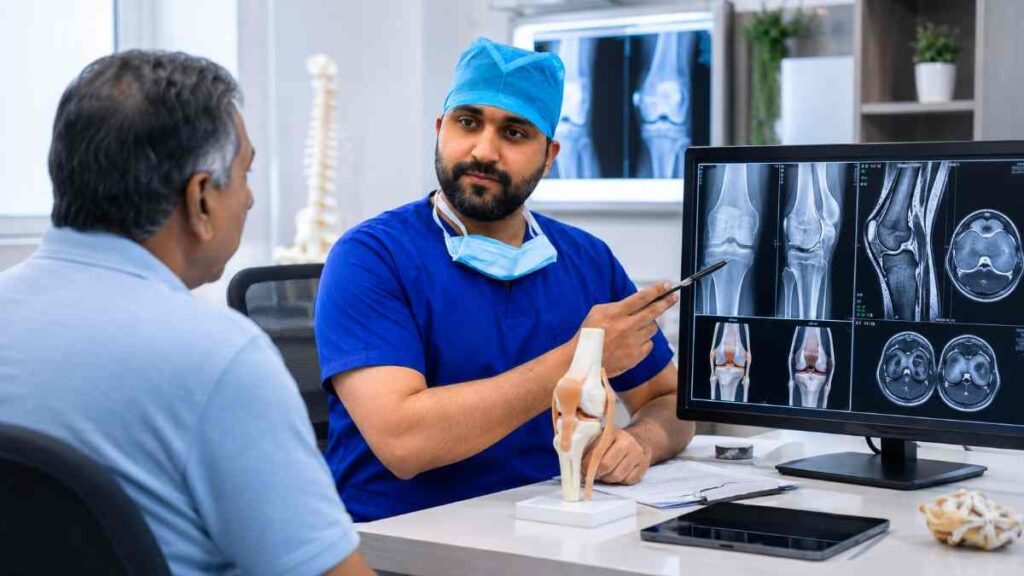
When Should You See an Orthopedic Specialist?
Don’t ignore knee pain if you have:
- Pain after an injury
- Swelling that doesn’t get better
- Trouble walking
- Knee feels
- Locking or can’t bend your knee
- Pain that lasts than a few days
Finding out early helps prevent long-term damage and improves recovery.
Tips to Keep Your Knees Healthy
- Keep a weight.
- Exercise to make leg muscles strong.
- Wear shoes that support your feet.
- Avoid turns.
- Warm up before activities.
- Eat a diet with calcium and vitamin D.
Conclusion
Knee pain can happen for many reasons from small muscle strain to severe arthritis. Understanding what is causing your pain is key, to choosing the treatment and preventing future problems.
If your knee pain doesn’t go away is getting worse. Affects your daily life see an experienced orthopedic specialist. Early treatment not helps with pain but also keeps your joint working well and improves your life.